
May is Hepatitis Awareness Month
Hepatitis B and Hepatitis C can become chronic, life-long infections which can lead to liver cancer. Millions of Americans are living with chronic viral hepatitis, and many do not know they are infected.
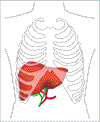 Although May is Hepatitis Awareness Month, viral hepatitis needs more attention throughout the year. One of the main findings from last year’s Institute of Medicine (IOM) report was the public and health care professionals lacked knowledge and awareness about viral hepatitis.
The term “hepatitis” means inflammation of the liver, and it refers to a group of diseases, each caused by a unique virus. In the United States, the most common types of viral hepatitis are Hepatitis A, Hepatitis B, and Hepatitis C.
3 important facts about viral hepatitis
- Two types of viral hepatitis, (Hepatitis B and Hepatitis C) can lead to chronic, life-long infections
- Many people with chronic viral hepatitis do not know they’re infected
- Chronic viral hepatitis can lead to liver cancer
Hepatitis B and Hepatitis C can lead to chronic, life-long infections
Hepatitis B is a liver disease that results from infection with the Hepatitis B virus. When first infected, a person can develop an “acute” or short-term infection. Some people are able to clear the virus but for others, especially those infected at birth or as young children, the infection remains and leads to a “chronic,” or lifelong, illness. While Hepatitis B is vaccine preventable, many people became infected before the Hepatitis B vaccine was widely recommended for children and adults at risk.Hepatitis C is a liver disease that results from infection with the Hepatitis C virus. Most people who become infected with the virus - up to 85% – go on to develop a chronic infection. For reasons that are not known, about 15%–25% of people will “clear” the virus without treatment.
Many people with chronic viral hepatitis do not know they’re infected
Many people with chronic viral hepatitis do not have symptoms and do not know they are infected. Even though a person has no symptoms and may appear healthy, the virus can still be detected in the blood and damage to the liver can still be occurring. Symptoms of chronic viral hepatitis can take up to 30 years to develop, and damage to the liver can silently occur during this time.
Chronic viral hepatitis can lead to liver cancer
Both types of chronic viral hepatitis can cause liver cancer and have contributed to the increases in rates of liver cancer in recent decades. At least half of new cases of liver cancer are from chronic Hepatitis C.Some population groups are disproportionately affected by viral hepatitis-related liver cancer. The number of new cases of liver cancer is highest in Asian and the Pacific Islanders and is increasing among African Americans, persons 46-64 years of age, and men.
With early detection, many people can get lifesaving care and treatment that can limit disease progression, prevent cancer deaths and help break the cycle of unknowingly transmitting the virus to others. If you are concerned about viral hepatitis, talk to your health care professional.
More Information
- Viral Hepatitis
- Institute of Medicine Report
- Hepatitis Awareness Month Resources
- Follow CDC Viral Hepatitis on Twitter @cdchep

- Get CDC Viral Hepatitis email updates from GovDelivery
- Resources for Hepatitis Awareness Month
- HHS Initiatives: Viral Hepatitis Actition Plan

When I was 26 years old, I learned my HBsAg was reactive when I was required to undergo medical exam for an employment (so depressed I wasn't hired and the doctor had to write in big words, 'not fit to work' on my medical result clearance). It was my first time to be tested with that kind of blood work, so I have no idea when I contacted hepatitis B virus. My husband and I are the only ones who knew about my situation. I am so embarrassed and ashamed because hepatitis B is considered as an STD, like the infamous AIDS/HIV. My husband has no hepatitis B (thankfully) but I fear that even with his hepatitis B vaccine, he will get my disease, though doctors assures us he is safe from me.I always sleep longer than usual on weekends, always tired, often experiences tummy ache, sometimes unexpected skin itchiness/rashes, arthritis, irregular bowel movement and am temperamental But today am totally cure with the help of this clinic i came across on this web FORUM, the clinic name (HEALTH MED LAB) here is their email CONTACT THEM IF YOU ARE diagnosed OF HEPATITIS B VIRUS or any other sickness healthmedlab@gmail.com
ReplyDelete